Elyria, OH · Garage Door Service
Avon's homes mostly went up after 2001, with lighter builder-grade track and rollers. Here's why that hardware jumps track and what the fix actually involves.
Most of Avon went up after 2001, which puts it well past the run of 1960s and 70s construction you see across a lot of this part of the service area. That later build date means builder-grade steel track, stamped rollers, and lighter-gauge brackets that were priced for volume construction, not for forty years of daily cycling. The track on these doors is thinner than what you'd find on a door from the 60s, and the mounting brackets flex more under load. When a roller starts riding the edge of the track instead of sitting square in it, it doesn't take long before the door walks itself right off the rail. On a house this age, the sideways failure usually starts at a bent bracket or a roller stem that's worn oval, not at the track itself, which is a different diagnosis than you'd make on an older door with heavier steel.
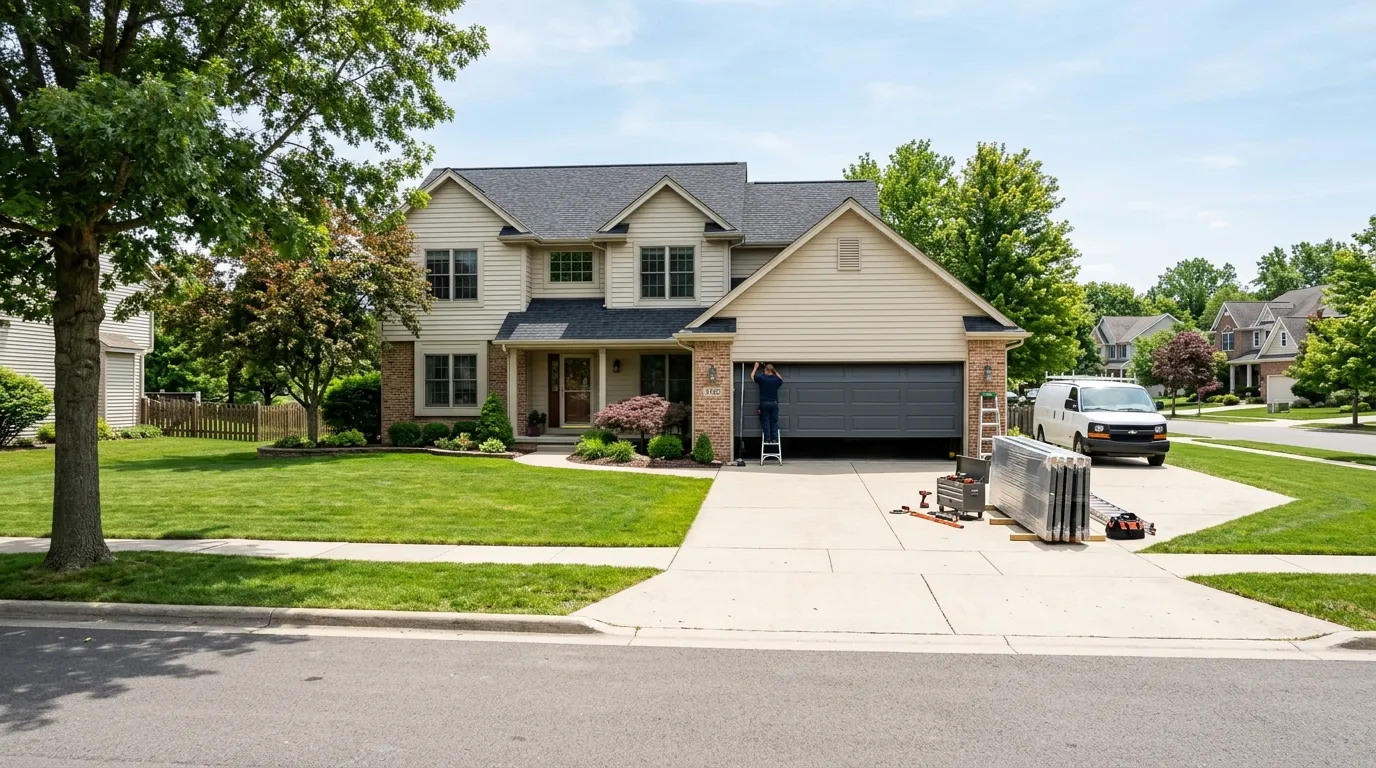
For a door that's jumped track, the truck carries replacement rollers in a couple of stem lengths, track sections in standard widths, and brackets sized for both the light builder-grade mounting most Avon garages have and the heavier aftermarket brackets some homeowners have already swapped in. We also carry cable and roller-bracket hardware because a door off track has often stressed the bottom bracket on one side, and that connection needs checking even if it looks fine from the ground. What we don't stock on the truck is specialty track cut to non-standard widths - if a door has an odd opening or a low-headroom track conversion, that part gets ordered and the visit turns into two trips instead of one.
Cold winters here put steel through a stress cycle that lighter builder-grade track wasn't built to absorb as gracefully as heavier stock. Steel contracts in the cold, and a bracket that was already a little loose from age or a slightly out-of-square opening will let the track shift just enough for a roller to catch the lip instead of running inside it. In a house built in 2001, that hardware has had roughly two decades of expansion and contraction cycles, which is enough to loosen factory-torque screws even without any impact. Add a garage that isn't heated, which is most of them, and the door sees the full swing of outdoor temperature every day. That combination - lighter gauge steel plus a full cold-climate swing - is what actually walks a roller off the rail, more often than a single dramatic impact.
We run this call from Elyria, about 7 miles out, and Avon is a routine trip on the schedule rather than a special dispatch. Bring us a rough idea of when the door started binding or scraping, and whether it happened suddenly or built up over a few weeks - that timeline tells us whether we're chasing a bent track or a bracket that's slowly worked loose. You can also start from the Avon service page if you want to see the rest of what we cover out this way, or check the Elyria off-track page for the general breakdown of how this repair works.
First step is getting the door back on track safely, which means releasing spring tension before anyone touches the rollers - a door under load that comes free unexpectedly is how people get hurt. Once it's safe, we check every roller for wear, straighten or replace bent track sections, and re-square the brackets to the framing. On a house this age, the framing itself is usually true, which is an advantage over older stock where the opening has settled over decades. That means the fix is often a matter of correcting the hardware rather than compensating for a warped jamb. If the track is bent badly enough in more than one place, replacing the full run costs less in labor than trying to straighten each section, and we'll say so rather than bill for extra time on a repair that won't hold.
The door usually gives a warning before it fully leaves the track: a scrape on one side as it travels, a roller that looks tilted in its bracket, or the door sitting slightly crooked when closed. Some owners notice a gap on one bottom corner that wasn't there before. If the door has already come off one side of the track, don't force the opener to keep cycling it - that's what turns a bracket repair into a panel replacement. Shut the power to the opener at the wall and call before running it again.
Doors built after 2001 in this area generally use lighter builder-grade track and rollers than older stock. That hardware handles daily cycling fine for years, but cold-weather contraction and small bracket movement over two decades of use are enough to let a roller catch the edge instead of running inside the rail.
We don't recommend it. A door on a spring system carries real force, and forcing a roller back into track without releasing that tension is one of the more common ways people get hurt on this repair. Shut off the opener and call rather than trying to muscle it back into place.
Standard rollers, brackets, and common track widths, yes. If your garage has a non-standard opening or a low-headroom track conversion, that part usually needs to be ordered, which means a second visit rather than a same-day fix.
Call now or request a free quote - same-day service on most repairs, upfront written pricing.