Elyria, OH · Garage Door Service
Oberlin homes mostly went up in the late 1960s, which means specific spring and track hardware. We drive the 8 miles from Elyria to fix it, no guesswork.
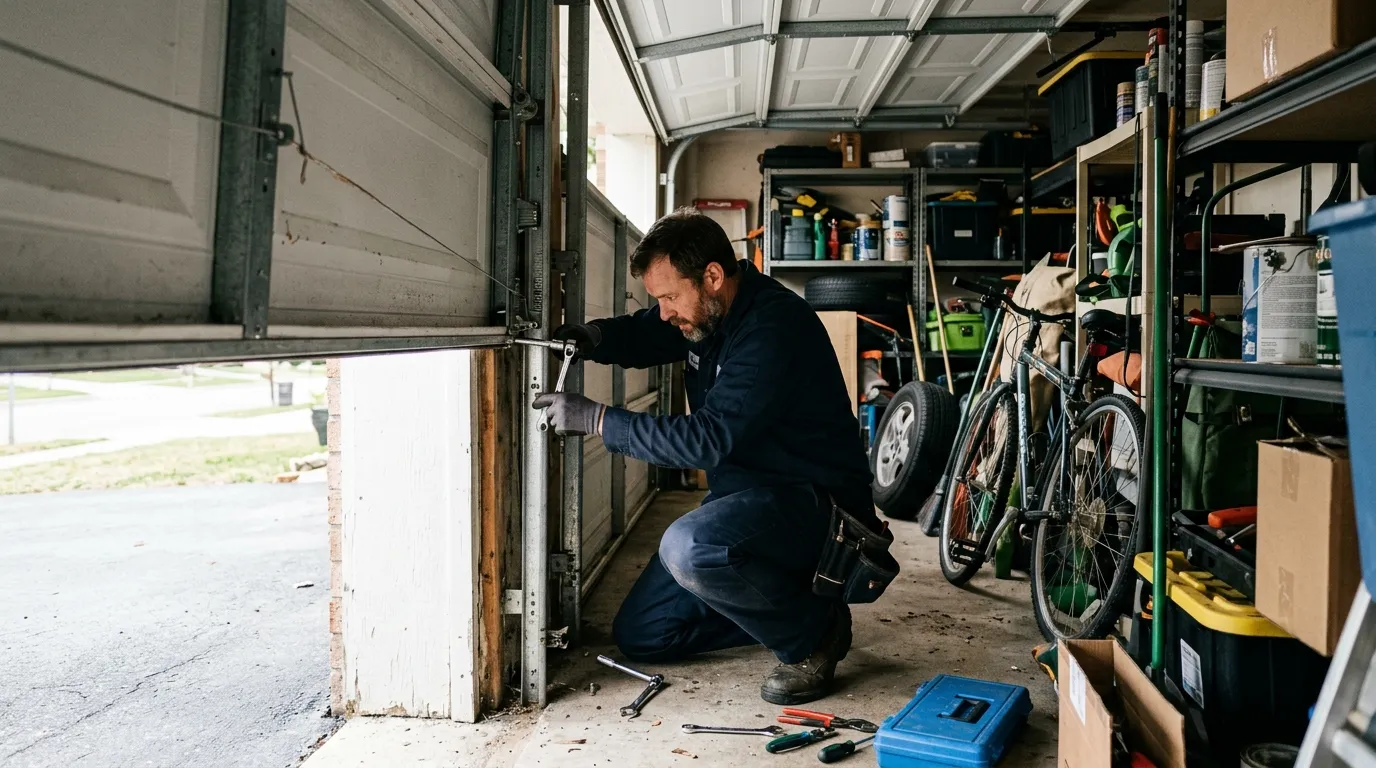
We run this call out of Elyria, about 8 miles from Oberlin, so we're not sitting on standby in town waiting for the phone - we're loading the truck when you call. That's worth saying up front because it means we ask a few more questions before we roll: what year the house is, whether the door is original, whether it's the spring or the opener acting up. With a town built mostly around 1968, a lot of doors are still running hardware from that era, and knowing that before we leave the shop means we bring the right torsion spring sizes instead of guessing on-site.
Give us the make of opener if you can read it off the unit, and tell us if the door is stuck shut, stuck open, or just noisy. That's usually enough for us to load correctly. We don't operate a walk-in counter in Oberlin itself - this is a dispatched call, not a storefront, and we want that clear before you book.
If your door won't open, check the obvious first: is the opener plugged in, is the safety sensor eye blocked or knocked out of alignment, is there a padlock or manual lock bar engaged on the track. Those cost you nothing to check and solve more calls than people expect.
What you should not do, on a house from this era especially, is touch the torsion spring. A 1960s-built double door on a torsion bar setup stores enough energy in that spring to break fingers or worse, and the winding cones on older hardware are often undersized or worn compared to what's sold today. Cable and roller swaps are also not a good DIY job if the door is a heavier insulated panel replacement from a later renovation - you can't always tell load by looking.
One honest limit: if the opener is more than about 15-20 years old and part-specific replacement boards for it aren't made anymore, we're not going to spend an hour hunting a part that doesn't exist. Sometimes the right call is a new opener, not a repair, and we'll tell you that instead of billing you for the attempt.
We don't quote a number sight unseen, because a broken spring on a 1968-era door with original hardware is a different job than a cable snap on a newer replacement panel. What we can tell you is what shapes the price: whether it's a single torsion spring or a pair, whether the drums and cables need to come off with it, and whether the track is bent or just off its rollers.
Oberlin's median household income runs lower than some of the towns nearby - around $73,775 against a wider service-area figure near $83,376 - and we mention that because we keep repair as the default recommendation over replacement whenever the door and frame are sound. A spring job is almost always cheaper than a new door, and on a lot of these houses the frame has held up fine even where the hardware hasn't.
Cold-climate winters here mean the truck carries lubricant rated for low temperatures, not the summer-grade stuff that gums up and slows a door down at 10 degrees. We also stock torsion springs in the sizes that match doors going up in the late 1960s and early '70s, since that's the majority of what we find once we're actually at the house.
We carry standard rollers, cables, and hinges for both steel and older wood-composite panels, plus a run of common opener logic boards and safety sensors. What we don't carry is a bin of springs sized for every custom or architect door ever built - if your house had a non-standard door installed at some point, that part may need to be ordered, and we'll tell you that on-site rather than pretend otherwise.
The failure pattern in Oberlin tracks pretty closely with the build year. A door installed around 1968 was built for a garage and a climate that hasn't changed much, but the spring steel has fatigued over fifty-plus years of winding and unwinding, and cold makes that steel more brittle right when the door gets used the most - heading out in the morning, coming back at night, both in the dark and both in the cold.
We also see openers from later retrofits, often installed decades after the door itself, paired with tracks and hardware that were never sized for a motor pulling that hard. That mismatch is common enough here that we check the track alignment on almost every opener call, not just the spring calls. It's not a dramatic failure - mostly it just wears the roller channel unevenly until the door starts binding on one side, which looks like an opener problem but isn't one.
No. We dispatch from Elyria, about 8 miles away, and cover Oberlin as part of that service area. There's no storefront or depot in town - it's a truck call, booked the same way whether you're a mile from us or eight.
Oberlin's housing mostly went up around 1968, and doors from that period often still run original torsion hardware. That hardware differs in size and wind pattern from what's sold today, so knowing the house's age before we arrive helps us bring the right spring instead of the wrong one.
Usually repair, if the frame and track are sound. A torsion spring swap costs far less than a new door, and most of the original-era doors we see in Oberlin still have good bones even when the spring or cable has failed.
Call now or request a free quote - same-day service on most repairs, upfront written pricing.