Elyria, OH · Garage Door Service
Elyria homes built between 1938 and 2002 often carry doors and track sized for a different era. See what a proper installation looks like in this climate and housing stock.
Most calls we get about installation aren't from someone who woke up wanting a new door. They come after a spring lets go on a door that's been patched twice already, or after a homeowner realizes the door they have is a single layer of steel with no insulation, installed back when that was normal. Elyria's housing stock runs 1938 to 2002, with a median build year around 1967, and a lot of the 26 named areas we work in still have the original garage door opening - sometimes the original door, just repainted a few times. That means openings sized to older standard dimensions, track mounted to framing that's shifted over sixty-plus years, and hardware nobody manufactures the same way anymore. When a door on a house like that fails, it usually fails all at once: cable off the drum, panel bent from a spring snap, or a track pulled loose from a stud that's dried out and moved. That's the point where replacement gets cheaper than another round of patching.
We're not going to hand you a number here that doesn't hold up once we've seen your opening, your framing, and what you want out of the door - insulation value, window layout, whether you want a smart opener or a standard one. What we can tell you is what drives the number up or down: the age of the opening (an older frame sometimes needs carpentry before a new door will seat right), whether the existing track and springs get reused or replaced, and insulation level, which matters more here than in a mild climate. Elyria sits in a cold, severe climate band, and an uninsulated single-layer door on an attached garage will cost you in heating bills and in condensation on the inside of the panel every winter. That's a real cost even if it never shows up on our invoice.
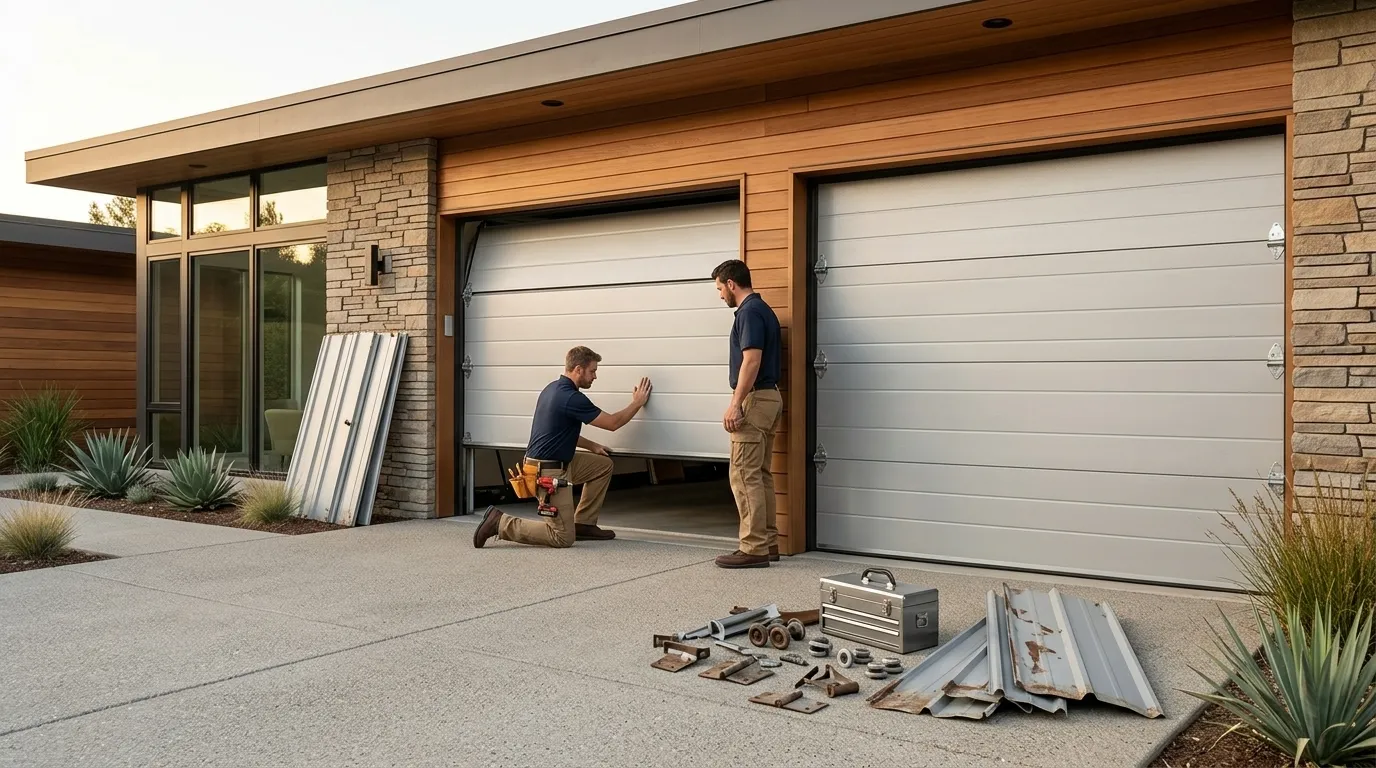
A proper installation starts with the opening, not the door. We check the framing square, the header height, and whether the existing track and spring system are worth keeping or need to come out with the old door. On a house from the 1960s or 70s - which describes most of the stock in this area - that often means new track brackets, since the originals were built for a lighter door than what's sold today. We size the spring to the actual door weight, not a generic chart number, because an undersized spring on a heavier insulated door is one of the fastest ways to end up back at your house in six months. Weatherstripping and bottom seal get fitted to the slab, not squeezed in as an afterthought, which matters more here given how much the ground moves through freeze-thaw cycles each winter. One thing we won't do: install a door on a frame that's out of square without correcting it first. Skipping that step is how you get a door that binds in the track by the second winter, and we'd rather tell you that up front than sell you a callback.
The failure pattern here isn't random. Houses built in the 1938-2002 range, with most of the stock clustered in the 1960s and 70s, were built to standards and door weights that don't match what's on the market now - or what this climate demands. A cold, severe winter puts steady stress on springs and hardware that a mild climate never would: metal contracts, lubricant thickens, and a door that was borderline in October starts binding by January. Add original track mounted to framing that's had sixty years to settle, and you get doors that look fine until the day they don't. Across the roughly 83,652 owner-occupied houses in this service area, that combination - older frame, older hardware, real winter - is the single most common reason installation jobs come in as emergencies instead of planned replacements.
There's no fixed age, but if your house falls in the 1960s-70s range that's common across this area and the door is original, repair parts are getting harder to match. Once you're replacing a spring, cables, and rollers in the same visit, a new door usually costs less over the next few years than another repair.
Not required, but worth it. This area sits in a cold, severe climate band, and an uninsulated door on an attached garage means more heat loss and more condensation on the inside panel in winter. If the garage shares a wall with living space, insulation pays for itself faster.
Usually yes, but not always. Homes built before the newer sizing standards sometimes have openings or framing that need minor adjustment before a modern door seats correctly. We check the framing as part of the installation, not after.
Call now or request a free quote - same-day service on most repairs, upfront written pricing.