Elyria, OH · Garage Door Service
Elyria Garage Door Pros fixes broken springs, off-track panels and dead openers on the 1960s-70s housing stock that fills most of Elyria's older neighborhoods.
The call usually starts the same way: the door won't budge, or it goes up six inches and stops. On the older side of town, where houses went up between 1938 and 2002 with a lot of that stock dating to the 1960s and '70s, the door itself is often original or close to it. That means single-torsion or even old extension-spring setups, steel tracks bent from decades of use, and openers that were never swapped out when the chain started slipping. Homeowners tell us the door slams down instead of lowering smooth, or it reverses halfway up for no reason they can see. Sometimes it's a cable that's frayed at the drum. Sometimes it's a roller that's cracked and binding in a track that's been out of plumb for years. In newer construction elsewhere this kind of failure is rare before year fifteen or twenty. Here, with median build year sitting around 1967 across the 26 named areas we work in, that failure window already closed on a lot of houses. The symptom is almost always mechanical wear meeting cold-weather stress at the same time, which is why calls cluster the way they do.
We're not going to throw a number at you that doesn't hold up once we see the door. Cost on a repair like this depends on whether you're replacing one spring or a matched pair, whether the drum or cable needs to come off too, and whether the opener is salvageable or needs replacing outright. What we can tell you is that in a service area where median household income runs $83,376, most of the jobs we quote are repairs, not full door replacements - the hardware on these older doors is usually fixable if the door panel itself is still square and not rusted through. Where it gets more expensive is when a homeowner waits on a broken spring and runs the opener anyway, which stresses the gears and the rail and turns a spring job into a spring-plus-opener job. Our honest limitation here: if the door has been run broken for more than a week or two, we can't always promise the opener survived it, and we won't quote a spring-only fix and then surprise you at the truck. We look at the whole system before we say a number out loud.
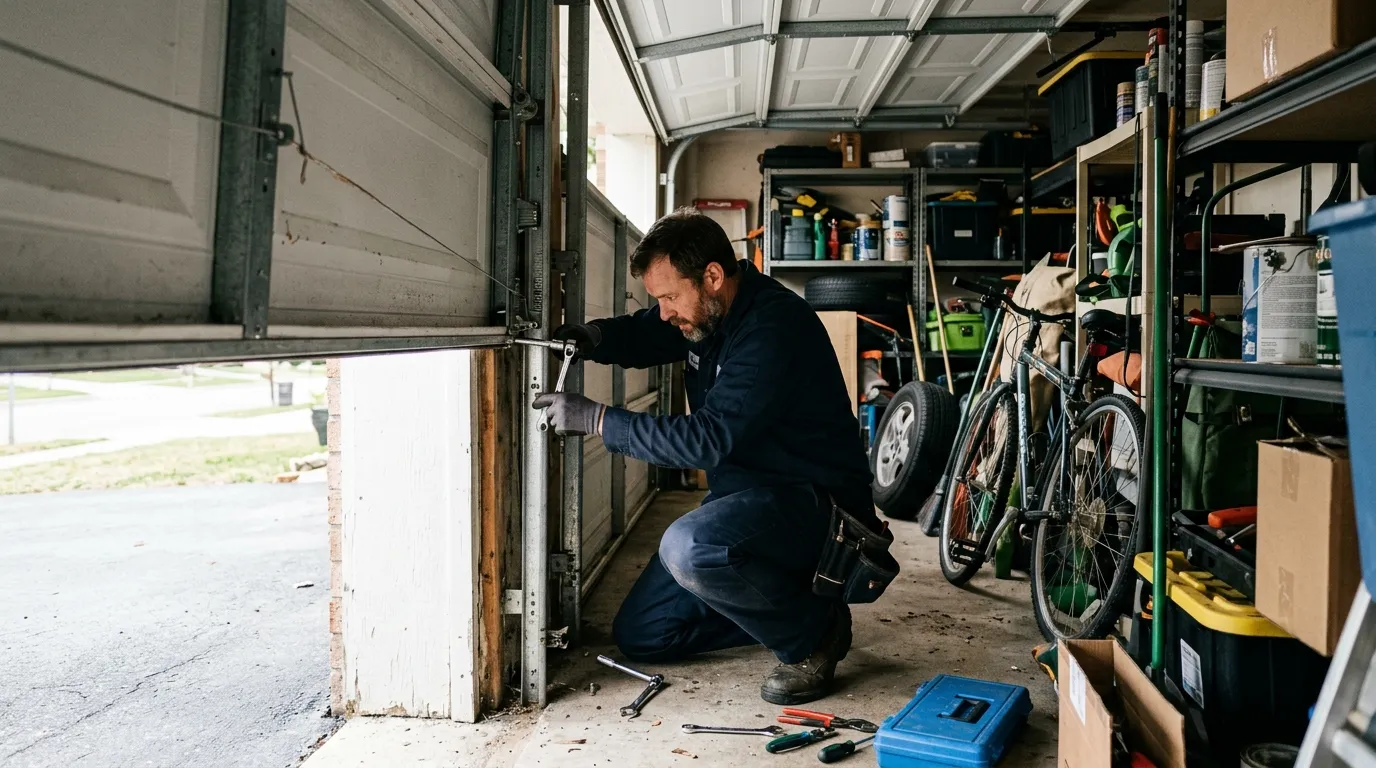
Most calls in Elyria break into a short list. Torsion spring replacement is the most common - we match the spring to the door weight and wind it to the right tension, which isn't a job for winging it with a cheap universal spring from a box store. Cable and drum work usually rides along with that, since a snapped cable is often what brought the door down in the first place. Roller and track alignment is next: on doors that have been in place since the 1960s-70s building wave, the track brackets have usually loosened at least once, and resetting them straight is half the fix. Opener repair or swap-out rounds out the list - if the logic board is dead or the drive gear has stripped, we replace the unit rather than patch it, since parts for the oldest chain-drive models aren't always stocked anymore. We test the balance of the door by hand after every job, not just the electric close cycle, because a door that closes fine on the opener but is out of balance will wear the new spring early. That balance check is the step that gets skipped when people rush it.
This isn't a generic wear-and-tear story - it's specific to what's sitting in driveways here. With a median build year around 1967 and most stock dating 1938 to 2002, a large share of the 83,652 owner-occupied houses across this service area still carry original or near-original door hardware, and that hardware was engineered for a different climate expectation than what actually happens here. Elyria sits in a severe cold band, and repeated freeze-thaw cycles work directly on torsion springs and steel rollers - metal contracts, lubricant stiffens, and the door draws harder on hardware that was already decades old. A door built and hung in 1968 was never sized against fifty-plus years of that cycle. Compare that to a subdivision going up today with sealed bearings and factory-lubricated torsion systems rated for the cold, and the difference in call volume is not a coincidence. It's also why we see clusters of near-identical failures across neighborhoods that were built out in the same few years - the doors are aging on the same clock, in the same climate, at the same time.
Steel contracts as it gets cold, and a torsion spring under constant tension is already working near its limit. In Elyria's severe cold band, repeated freeze-thaw cycles stiffen lubricant and add stress to metal that's often decades old on original 1960s-70s hardware, so cold mornings are when older springs finally give out.
Not usually. Most of what we see on houses built between 1938 and 2002 is fixable - springs, cables, rollers and openers can all be replaced without touching the door panel itself, as long as the panel is still square and not rusted through. We'll tell you honestly if replacement makes more sense than another repair.
If the door ran broken or unbalanced for a while before the spring got fixed, the opener's gears and rail often took extra strain. We check opener condition separately from the spring job, because a new spring on a worn-out opener just moves the failure point somewhere else.
Faster than most people expect. Running the door on the opener after a spring breaks - even for a day or two - puts the full door weight on the drive gear and rail, which can turn a spring-only fix into a spring-and-opener job within a week.
Call now or request a free quote - same-day service on most repairs, upfront written pricing.